The Architecture of a Second Chance
Paul Vautrinot walked out of the Las Vegas underground to rebuild the fractured safety net he once relied on to survive.
Featuring Paul Vautrinot · November 16, 2026 · 1,120 reads
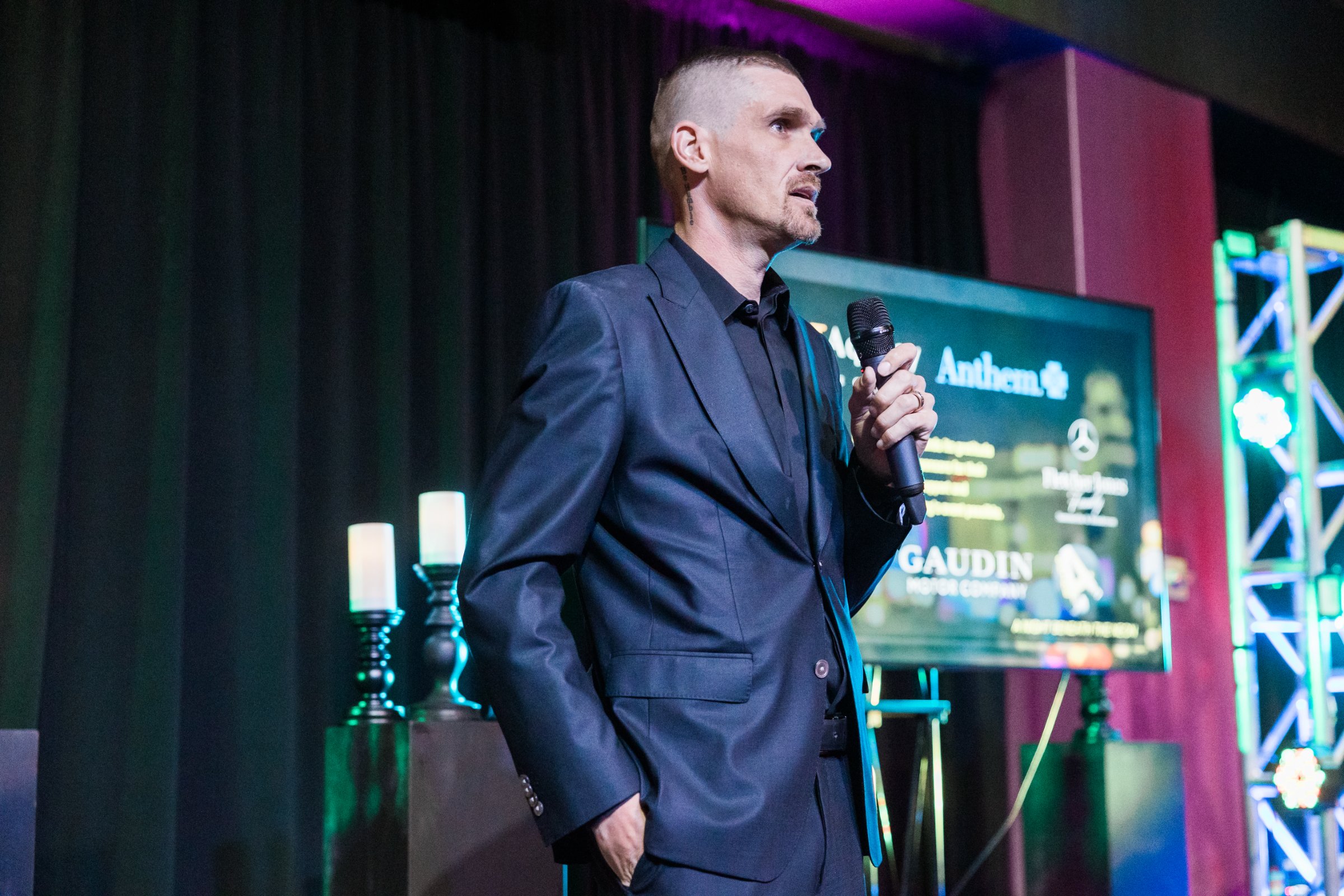
“Our job isn't simply to get someone off the street or into treatment. It's to help them build a life where they don't have to return to either.”
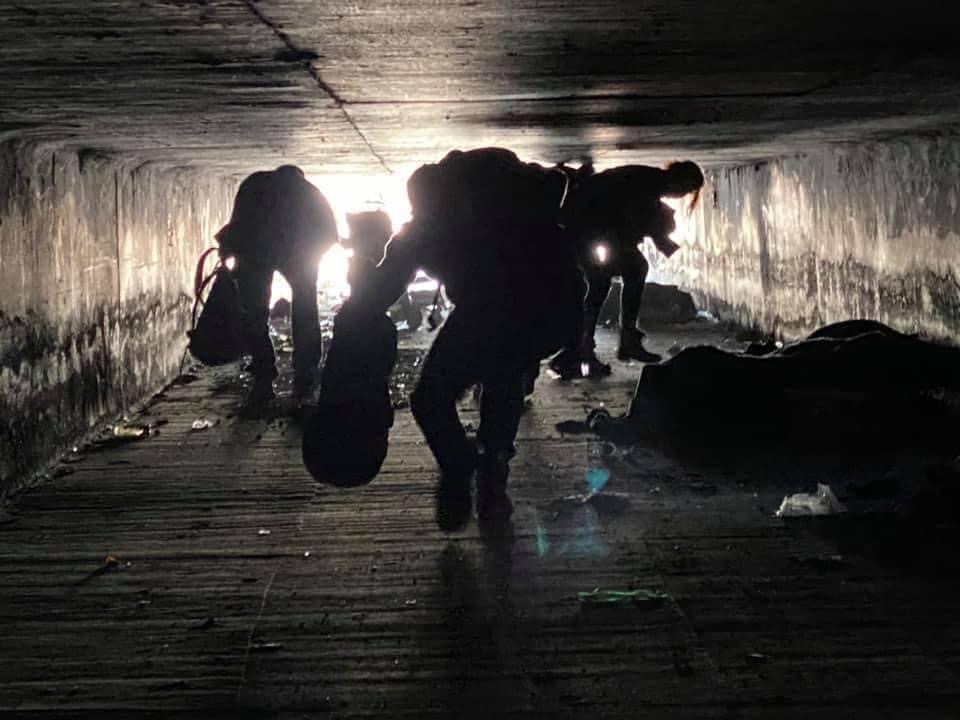
Deep beneath the hum of Interstate 15, in the cavernous flood control channels that snake behind Caesars Palace, flashlight beams cut through the damp subterranean chill. Paul Vautrinot and his team from the Shine A Light Foundation were moving through the corridors on an outreach shift when they stopped to visit a long-time friend residing in the tunnels. The man had just finished sketching on a six-foot slab of salvaged cardboard, rendering an elaborate movie poster in sweeping ink strokes, complete with dramatic billing and a cast list tucked into the corner.
The feature film, according to the cardboard header, was titled Zombie Werewolf Pack. Looking closely at the names, Vautrinot realized that the artist had folded everyone into the ensemble: the residents who carved out an existence in the wash were cast as the werewolves, their companion animals were drawn into the pack, and the outreach workers of Shine A Light were named as the zombies.
The drawing stopped Vautrinot cold. In a single piece of underground art, the traditional barrier between provider and client dissolved. The foundation had not been portrayed as an outside authority arriving from above ground to dictate terms or bestow charity; they were written directly into the community’s mythos. The residents and the outreach crew occupied different sides of the problem, but in the dim concrete wash, they were acknowledged as equals. For Vautrinot, that piece of cardboard captured the core premise of his life’s work: trust is not established through clinical superiority, but through radical presence.
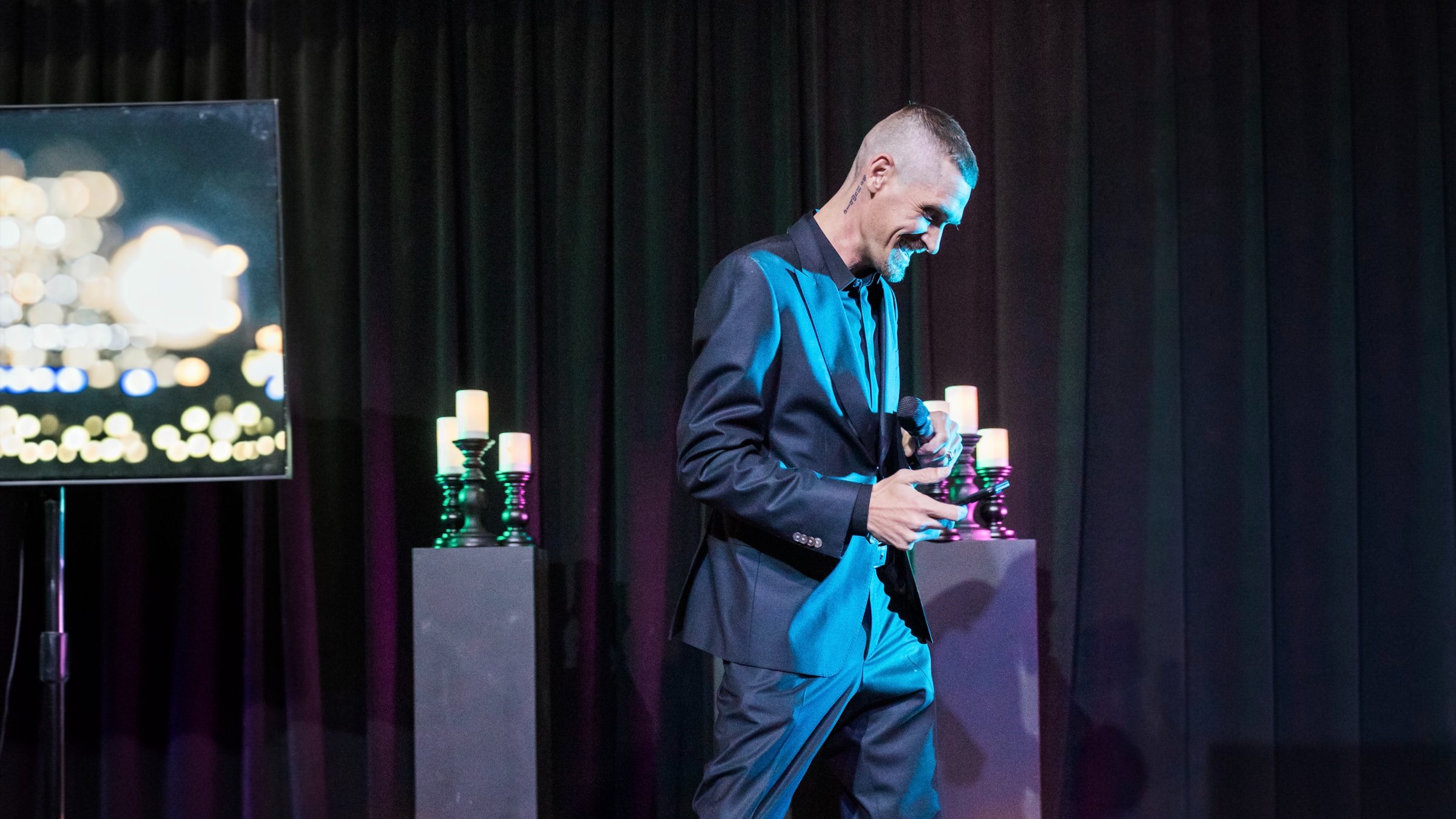
The Reckoning of a Native Son
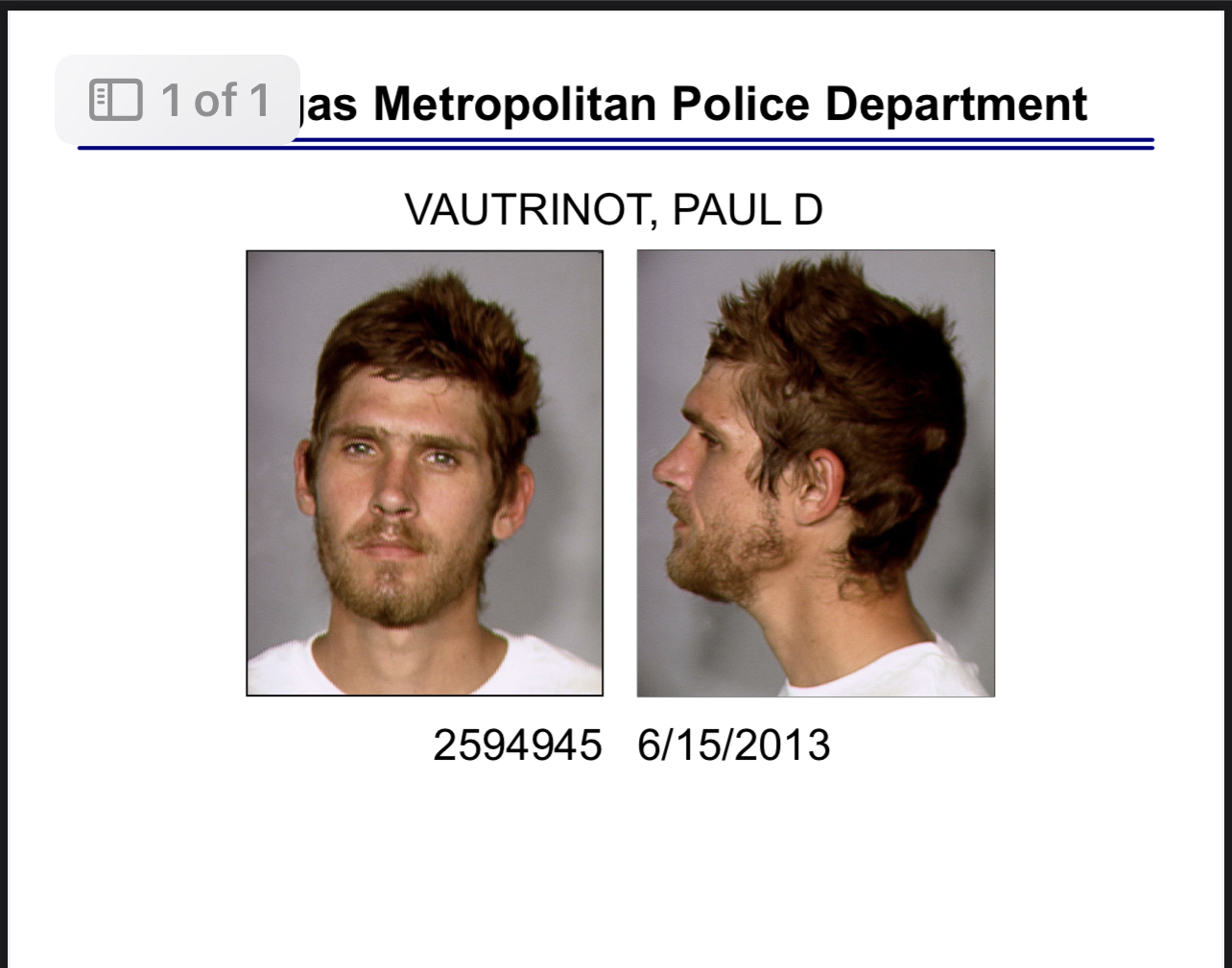
Unlike many who arrive in Southern Nevada chasing fortune or escaping their past, Vautrinot is a born-and-raised Las Vegan. The valley’s wide arterial avenues, neon horizons, and hidden storm drains formed the setting for his childhood, his descent into severe addiction and homelessness, and ultimately his resurrection. For years, the desert metropolis served as the staging ground for his darkest chapters. When recovery finally took hold, it carried a distinct geographic weight.
He recognized that he had taken immeasurably from the city that shaped him, and recovery demanded more than personal sobriety; it demanded restitution. He chose to make amends directly to Las Vegas by stepping back into the exact margins where he had once struggled to stay alive. That decision laid the groundwork for Shine A Light Foundation, an organization designed not just to descend into the drainage basins with supplies, but to walk alongside people through the disorienting labyrinth of survival, treatment, and long-term reintegration.
The Ghost in the Database
Early in his career in behavioral health, Vautrinot experienced a moment of bureaucratic absurdity that fundamentally redirected his approach to human services. Sitting at a terminal, he searched for his own name in the community’s shared homeless services database. To his astonishment, the system still classified him as an active, unhoused individual—despite the fact that he was three years clean, stably housed, and employed in the very sector entering the data.
The discovery exposed an institutional blind spot. The valley’s social services infrastructure had perfected the art of tracking touches, intake forms, and distributed goods, but remained blind to human resolution. Programs could quantify how many sandwiches were handed out or how many nights a cot was occupied, yet they rarely tracked whether an individual ever made it across the finish line of self-sufficiency. The community safety net was dutifully logging chapters without ever helping people finish their stories.
That clerical realization hardened into an operating philosophy. Vautrinot began challenging the prevailing nonprofit metrics, arguing that tracking transactional assistance without accounting for long-term stabilization was a recipe for perpetual crisis. Helping someone off the asphalt was merely the opening movement; the true measure of success lay in what happened twelve, twenty-four, and thirty-six months later.
Aligning the Wheels
A few years into directing Shine A Light, Vautrinot participated in Leadership Las Vegas, an immersive civic development program. During an exercise dedicated to the valley’s safety net, the structural dysfunctions of the region came into sharp relief. Agency after agency described identical populations while operating in rigid institutional silos, fiercely guarding their balance sheets and competing for identical philanthropic pools.
Around the same time, Vautrinot read Johann Hari’s Chasing the Scream, an investigation into the roots of the drug war and the vital necessity of human connection in overcoming addiction. The two experiences converged into a clear thesis: Las Vegas did not require another boutique non-profit program or an entirely reinvented safety net. What the community desperately needed was an alignment of the wheels that were already spinning in place.
A fragmented system forced vulnerable people to navigate an exhausting obstacle course. If an individual in the tunnels reached a point of willingness, they needed immediate access to medical detox—not an appointment scheduled three weeks out. Leaving detox required an immediate transfer into safe, structured housing, followed by integrated mental health therapy, workforce development, and peer mentorship. Under the status quo, encountering a setback at any single stage meant being dumped back to the beginning, forced to reapply and re-prove trauma at every administrative intake.
Vautrinot began advocating for systemic cohesion, arguing that a slip or bureaucratic delay should not reset a human life back to zero. As he often reminds providers across the valley, "Our job isn't simply to get someone off the street or into treatment. It's to help them build a life where they don't have to return to either."
Reframing the Narrative
Working in behavioral health carries a subtle occupational hazard: the savior complex. Vautrinot has observed countless well-intentioned individuals enter outreach work only to burn out or cause unintended harm because they fell in love with their own role in the rescue narrative. He urges newcomers to dismantle that ego early.
"Don't fall in love with being the person who helps. Fall in love with seeing people succeed, even when you're not the one who gets the credit," he emphasizes. Good intentions, he insists, do not automatically yield sound outcomes. Effective intervention requires listening deeply to the community being served, honoring their agency, and recognizing that outside practitioners are never the authors of another person’s journey. The provider’s role is that of a quiet collaborator, holding space and clearing brush while the individual writes their own redemption.
This ethos shaped Shine A Light's operational culture. By focusing on radical consistency, the team built generational equity with the men and women inhabiting the valley's flood channels. They showed up when there were no cameras, maintained relationships when clients relapsed, and treated every engagement as an investment in mutual respect.
A Shifting Valley
A decade ago, attempting to foster systemic collaboration across Southern Nevada was an uphill battle. The civic landscape often prioritized personal pedigree over practical efficacy. Nonprofits operated like fortified fiefdoms, wary of outside observation and protective of their proprietary territory.
Vautrinot found inspiration in valley outliers like Jeff Iverson and Erin McGarry Engelstad—leaders who challenged entrenched bureaucracies with blunt clarity and zero tolerance for institutional complacency. Like them, Vautrinot refused to accept the argument that inefficiency was simply the way things had always been done.
Over the past ten years, the cultural tide has turned. Vautrinot discovered that the desire for authentic collaboration was far more widespread than the leadership circles suggested. Across frontline organizations, caseworkers and directors were quietly yearning for a coordinated approach. As Shine A Light demonstrated that collective accountability enhanced rather than diminished individual missions, historic walls began to crack. Organizations that once regarded one another as competitors began sharing resources, data, and handoffs, recognizing that when the safety net functions as a unified fabric, everyone benefits.
Redefining the Ledger
The relentless pace of street outreach, crisis intervention, and systems reform takes an undeniable physical and emotional toll. For years, Vautrinot measured his personal worth through the prism of sheer volume: how many crises he could triage, how many hours he could surrender, and how heavily he could shoulder the city's pain. Busyness masqueraded as purpose.
Over the past year, that internal accounting underwent a major recalibration. Vautrinot recognized that martyring himself on the altar of community work was neither sustainable nor noble. Genuine leadership demanded that he build a sustainable life capable of holding space for his children, his personal peace, and his own enduring health.
Today, his definition of professional achievement is stripped of vanity. He no longer seeks to run the most prominent agency in the county. Instead, he directs his energy toward establishing protocols, coalitions, and standards that elevate every partner in the room. His ambition has shifted from scaling an empire to engineering an ecosystem that outlasts his personal participation.
Building Beyond the Self
Vautrinot is currently focused on architecting a comprehensive, community-wide framework to govern how Las Vegas addresses the intersection of addiction, homelessness, and recovery. The goal is an integrated operational network where agencies retain their distinctive identities while assuming shared legal and ethical responsibility for the individuals migrating between their programs.
In this envisioned future, success will no longer be tabulated through grant-friendly outputs like bed counts or hygiene kits distributed. It will be governed by longitudinal stability—measuring how many people are still housed, working, and flourishing five years down the line. Vautrinot wants cross-sector collaboration to cease being an aspirational talking point for regional conferences and become the baseline operating standard of Clark County.
By building an infrastructure owned by the entire community rather than a single flagship foundation, Vautrinot is laying the groundwork for an enduring civic transformation. If the work succeeds, the fragmented, territorial methods of the past will one day look like relics of an unenlightened era. For the boy who wandered the desert streets and conquered his own ghosts in the concrete underground, making amends to Las Vegas means ensuring that no one else gets lost in the dark.
About Paul Vautrinot
Paul Vautrinot is a Las Vegas native, person in long-term recovery, and the Founder and Executive Director of Shine A Light Foundation, where he works to build an integrated, outcome-focused community safety net across Southern Nevada.