Robert Lacy and the Sound of Self-Belief
How a former accountant built Manifest Academy to give Las Vegas youth the stages, studios, and roadmaps they need to thrive.
Featuring Robert Lacy · November 19, 2026 · 873 reads

“Music is deeper than fame and fortune. It can reshape our minds. It can help us define who we are. It can change how the world sees us.”
A young student walked into the studio, looked Robert Lacy in the eye, and shared an ambition that most of the world would have dismissed out of hand: he was deaf, and he wanted to be a rapper.
In the unforgiving arena of hip-hop, cadence, articulation, and timing are scrutinized down to the millisecond. Lacy, an experienced emcee himself, knew the brutal reality of an audience that rarely offers grace to newcomers. Rather than offering polite platitudes or steering the teenager toward a quieter discipline, Lacy met him with radical honesty. He explained that "this would take more practice than the average artist ever puts in, because we wanted people to fall in love with his art, not get stuck on whether they could understand him."
The young man wrote a verse, and the two went to work. Week after week, month after month, they dissected syllables, tracked vocal vibrations, and ran the lines into the microphone until the repetition became muscle memory. For nearly an entire year, they rehearsed the cadence until the day arrived when the track was laid down: crisp, articulate, and delivered with immaculate diction. In laboring over the architecture of a four-bar phrase, the young man had unlocked a whole new clarity in his everyday speech.
Moments like that define why Lacy walks into recording booths and community centers across the valley every morning. What happens in front of a microphone is never merely about a hit record or transient celebrity; it is about rebuilding the human spirit from the inside out.
The Leap Beyond the Ledger
Before Lacy became an essential architect of Southern Nevada’s youth arts landscape, his daily routine belonged to balance sheets and automotive dealerships. Working as a business accountant, he spent his days buried in ledgers, tracking margins and navigating corporate payrolls. He had already spent years running grassroots youth programming and mentoring young people in Southern California, beginning when he was just eighteen, but it had always existed on the periphery of a stable corporate career.
In 2018, Lacy and his family relocated from San Pedro, California, to Las Vegas, searching for a fresh chapter. The city quickly revealed itself to be far more than a change of scenery; it was the place where his long-simmering purpose finally crystallized. Not long after arriving, Lacy noticed an opening for a producer position with Notes for Notes, a national nonprofit organization that designs, builds, and operates free, state-of-the-art recording studios inside youth facilities.
The creative opportunity was extraordinary, but the reality was terrifying: taking the job meant walking away from an established financial career and absorbing a steep twenty-thousand-dollar pay cut.
The courage to take that step came from his late wife, Carmen. She knew that numbers paid the bills, but she also knew that youth development was who Lacy was down to his marrow. Carmen assured him that they would find their footing on her income and urged him to take the leap of faith into full-time advocacy. Without her unwavering conviction during that crossroads, Manifest Academy would never have come to life.
Bridging the Distance Between Talent and Direction
Once inside the studio full-time, Lacy encountered the same heartbreaking pattern repeatedly among young people ages six through eighteen across Las Vegas. Raw talent was everywhere—spilling out of bedroom notebooks, beat-making apps, and open-mic sessions. What was missing was almost everything else.
A young creator would discover a formidable natural voice, only to run headlong into an invisible wall. They had no access to industry-grade equipment, no grasp of copyright fundamentals or intellectual property, no awareness of stagecraft, and no blueprint for transforming an emotional impulse into a sustainable enterprise. Talent, Lacy realized, is never the scarce resource; the scarcity lies in infrastructure, consistent roadmaps, and having someone experienced standing in their corner.
Lacy resolved to eliminate that void. Long before Manifest Academy was an officially incorporated 501(c)(3) entity, he was already staging workshops, offering production hours, and organizing performance showcases. He refused to wait for philanthropic funding to legitimize the work. If the young people needed a stage today, the stage had to be built today. Incorporating the organization was simply the bureaucratic formalization of a living, breathing movement he had already set in motion on the ground.
The Transformative Psychology of Art
Over years of continuous studio sessions, Lacy observed the deep intersections between creative expression and emotional wellness. For many youth in the valley, trauma and anxiety are ambient conditions, difficult to diagnose and even harder to articulate around a dinner table or inside a counselor's office.
"Music is deeper than fame and fortune," Lacy reflects on his time behind the soundboard. "It can reshape our minds. It can help us define who we are. It can change how the world sees us, and carry us to places beyond our wildest dreams."
In Lacy’s framework, an eight-bar verse or a spoken-word stanza is an emotional decompression chamber. When a teenager is guided through the mechanical process of finding the right metaphor, they are simultaneously naming their fears, metabolizing grief, and releasing the pressure valve of everyday survival. Writing and production provide safe containers for thoughts that would otherwise fester in silence. As Manifest Academy expanded, its core metric shifted away from commercial aspirations toward emotional wellness. Success became defined by how many young people could emerge from isolation into creative agency.
Daily Compounding and Creative Discipline
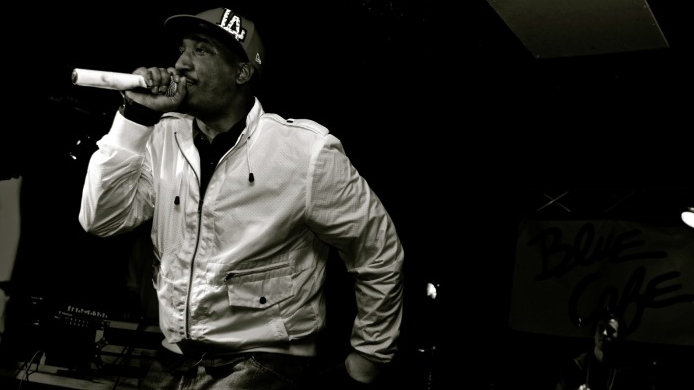
When aspiring artists and mentors seek his guidance, Lacy offers a grounded philosophy rooted in his dual backgrounds in corporate accounting and hip-hop culture. He tells them to bypass external expectations and begin by identifying their core reason for creating: their "why."
He teaches his students that success cannot be standardized. For an uninitiated student, success might simply be writing down a complete four-line stanza for the first time without crumbling the paper in frustration. For another, it is achieving pristine vocal articulation or finishing a fully mixed master. Because each artist enters the studio with a different baseline of trauma, technique, and confidence, progress must be measured individually rather than competitively.
His advice mirrors financial mechanics: consistency over spectacle. Lacy reminds his students that "daily effort compounds like interest, and over time the success shows up without fail." The discipline of showing up every single afternoon to write, adjust microphone gain, or rehearse a hook builds a creative equity that no shortcut can replicate.
The Architecture of Community
Manifest Academy’s rapid rise within Las Vegas is also a testament to the community leaders who recognized Lacy’s vision and lent their weight to it. Lacy is quick to point to the figures who helped ground his efforts within the city.
Early on, he found a vital ally in Amilcar Welton, CEO of Create Digital and a Notes for Notes board member whose credentials include commercial hits and voting membership in the Recording Academy. Welton became an indispensable sounding board, providing seasoned counsel on music entrepreneurship and organizational strategy.
When Lacy first envisioned a valley-wide youth performance platform, he shared the concept with LaCresha McManus, who was serving in executive leadership at the Boys & Girls Club. McManus immediately grasped the potential, securing the West Las Vegas Library Theater to host the inaugural showcase that would eventually become known as Uprising. McManus fell in love with the mission and now serves on Manifest Academy’s board of directors.
Similarly, spoken-word artist Nise Daniel joined the board and took the helm of the organization's poetry division. Daniel designed an innovative curriculum that established a direct municipal partnership with the City of Las Vegas, delivering spoken-word education straight into local recreation centers. Her work has built a self-sustaining ecosystem where young poets are mentored into confident performers, enriching the valley’s literary scene.
Alongside them sits Dr. Kara Jenkins, who made history during her 2024 mayoral campaign. Her enduring commitment to equity and community advocacy has provided Lacy with a living masterclass in public service and systemic representation.

The Expanding Stage
Today, Manifest Academy is actively assembling an expansive, multi-tiered infrastructure designed to support young Las Vegans wherever they happen to stand.
Its public performance platforms span across genres and subcultures. Beyond Uprising, the organization operates Feedback, an energetic showcase created specifically for youth rock bands; GEMS, a dedicated platform celebrating adolescent poets; and Family Rave, an unprecedented two-year DJ residency for young electronic music producers hosted at Area 15.
Behind these bright stages lie rigorous artist development tracks. Manifest Academy Artist Development (MAAD) guides musicians through the complexities of professional production and business acumen, while Speak Easy provides an equivalent incubator for emerging spoken-word talents. Recognizing that the young people most in need of creative lifelines are often those hidden from view, Lacy created Pathways—an adapted version of the MAAD curriculum brought directly inside juvenile correctional facilities, offering incarcerated youth a constructive voice and a tangible path toward renewal.
Looking toward the horizon, Lacy is focused on securing institutional endowments and philanthropic partners to ensure that every Manifest Academy program remains completely tuition-free in perpetuity. The mission remains what it has been since he left the accounting office: to stand by the next generation, hand them the microphone, and give them the room to be heard.
About Robert Lacy
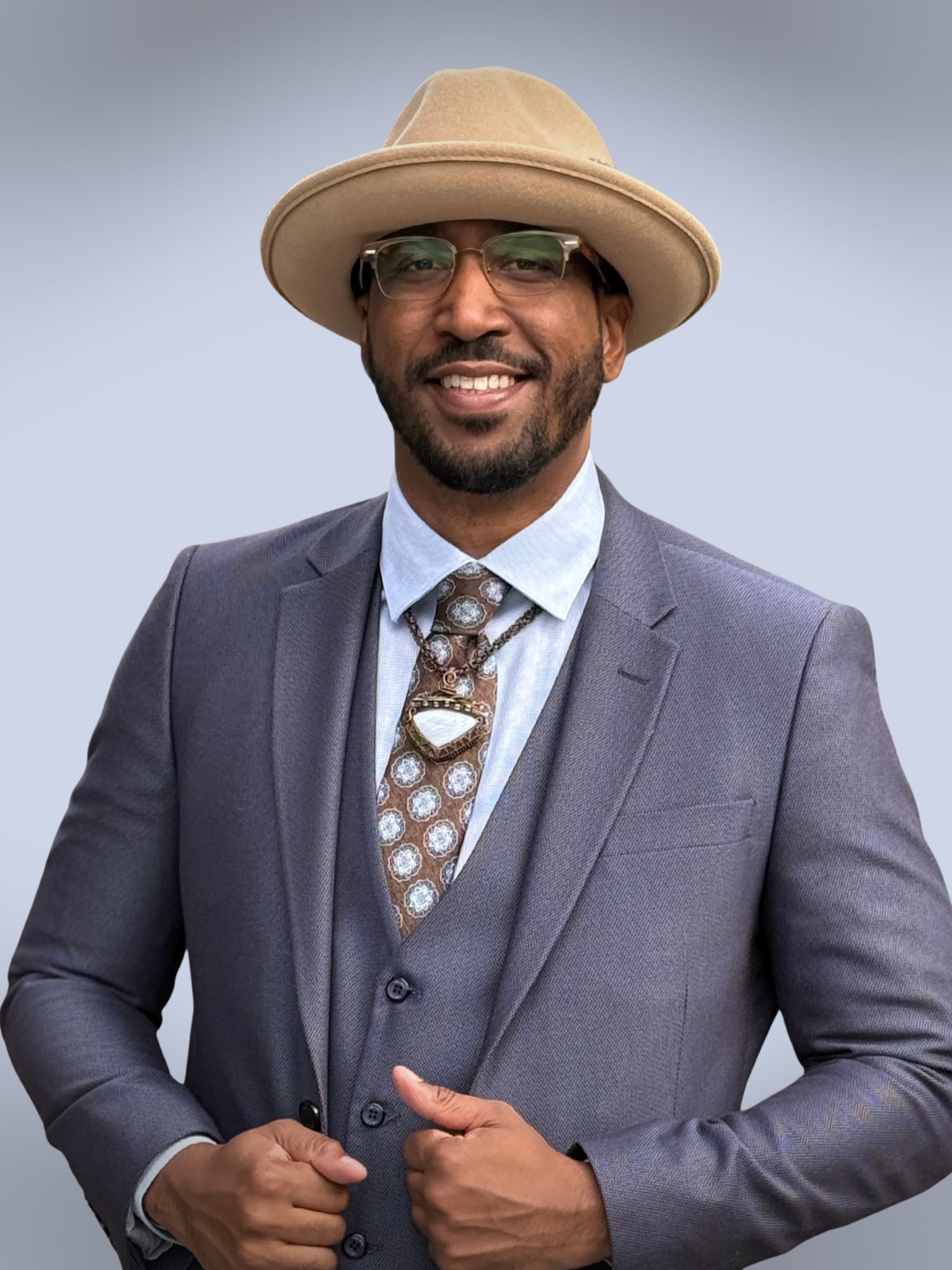
Robert Lacy is a youth advocate, rapper, and the founder of Manifest Academy, a Las Vegas nonprofit empowering emerging artists. He also serves as Senior Producer for Notes for Notes Las Vegas.