No Silos in the Valley: Jimmy DePew’s Second Mission
Retired Air Force veteran Jimmy DePew bridges the punk scene, recovery circles, and veteran services by refusing to stop showing up.
Featuring Jimmy DePew · October 21, 2026 · 397 reads
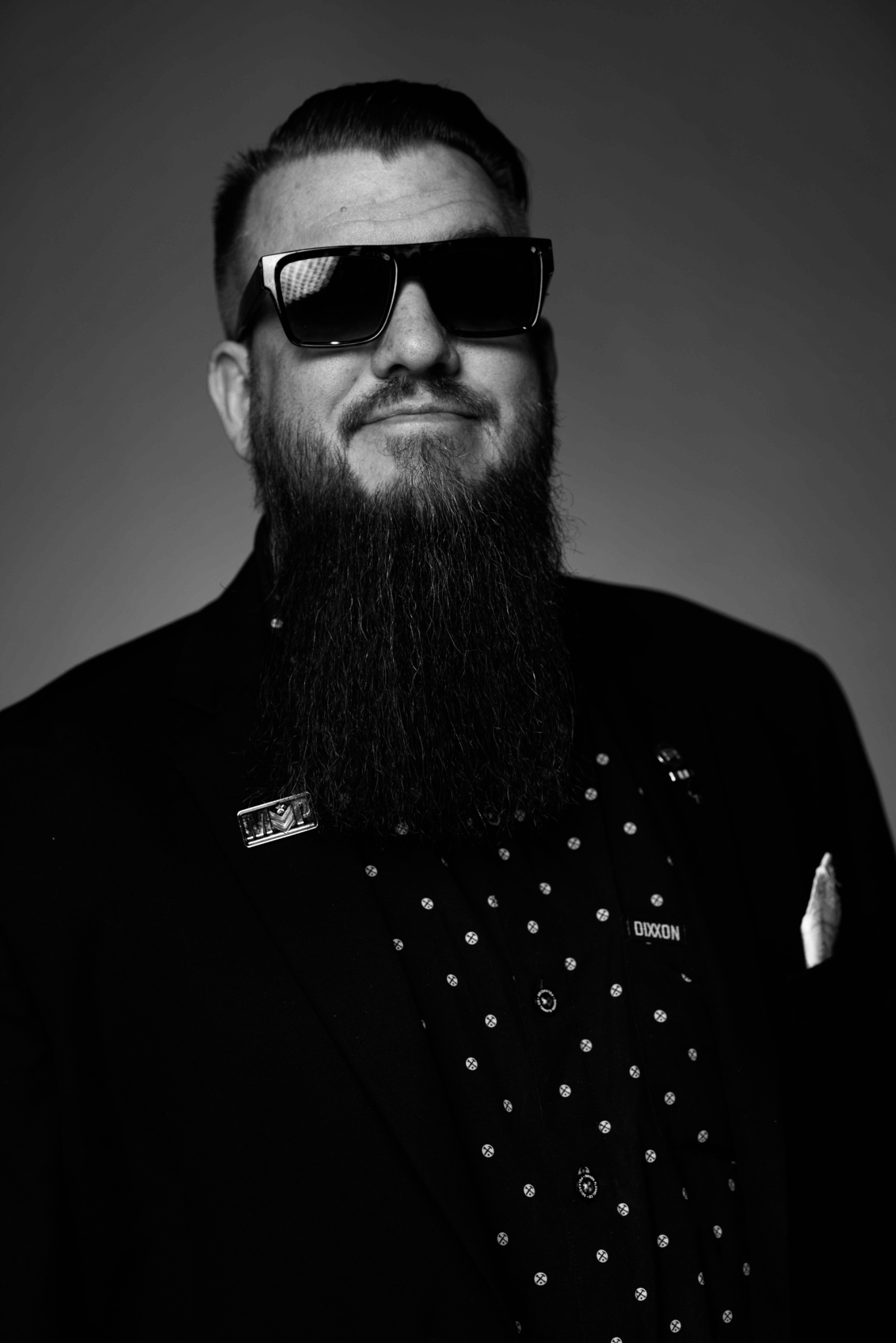
“I don’t want to just have a seat at a bunch of different tables. I want to be the person who realizes those tables should probably be pushed together.”
Beneath the neon hum and concrete sprawl of Las Vegas lies a vast network of flood channels where hundreds of unhoused people seek shelter from the desert elements. To find someone in those tunnels takes patience, flashlights, and a willingness to step into the dark. Jimmy DePew walked those underground corridors multiple times searching for one man named Dillon. There were no cameras, no grand promises, and no quick fixes—just repeated conversations, repeated check-ins, and repeated rejections. DePew kept returning until the answer finally shifted from a quiet no to an exhausted, hopeful yes.
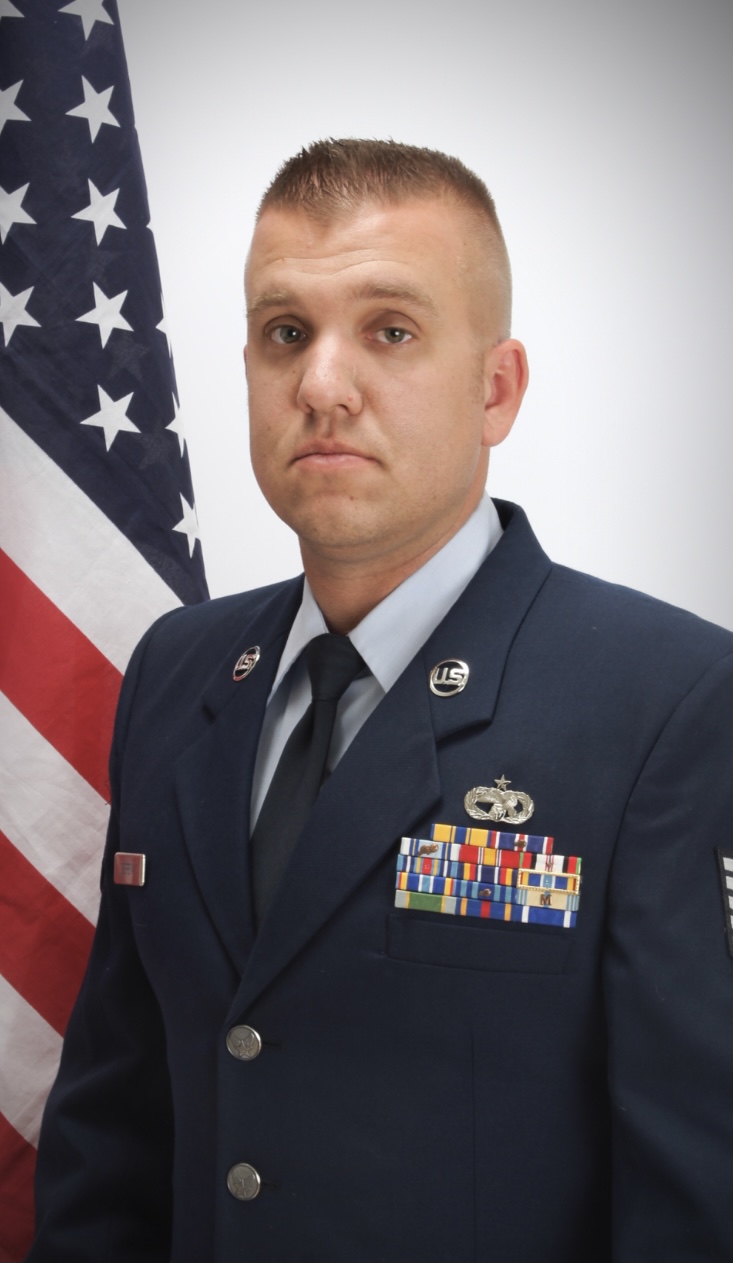
That persistent presence defines DePew’s life today. Known throughout the valley as “Pew Pew,” the Las Vegas native spent two decades in the Air Force Reserve as a Port Dawg, deploying five times across the globe, including multiple tours in Afghanistan. Military logistics taught him how to keep heavy cargo moving under impossible conditions, but coming home demanded an entirely different kind of discipline.
Putting the Armor Down
For years, DePew excelled at the outward mechanics of responsibility. He raised a family, advanced in uniform, and shouldered whatever burden landed on his desk. What he had not learned was how to pause and process the weight he had carried back across the ocean.
The turning point arrived when he chose sobriety. Stepping away from alcohol dismantled the illusion that self-reliance was the only virtue. It meant entering therapy, learning how to ask for help, and confronting the reality that vulnerability is not a liability.
“I used to think strength meant carrying everything yourself,” DePew reflects. “Today, I think strength is being willing to put some of it down, do the work, and then reach back for somebody who might still be carrying theirs.”
Sobriety did not shrink his world; it gave him a clearer lens through which to view it. The discipline once channeled into military deployments turned toward his hometown, transforming personal recovery into a catalyst for community work.
The Overlap of Subcultures
On paper, the communities DePew navigates might seem entirely separate: combat veterans navigating civilian life, musicians in the underground punk scene, men and women battling addiction, and unhoused neighbors living on the streets. Yet where others see fractures, DePew sees an ecosystem bound by shared human needs for belonging, honesty, and purpose.
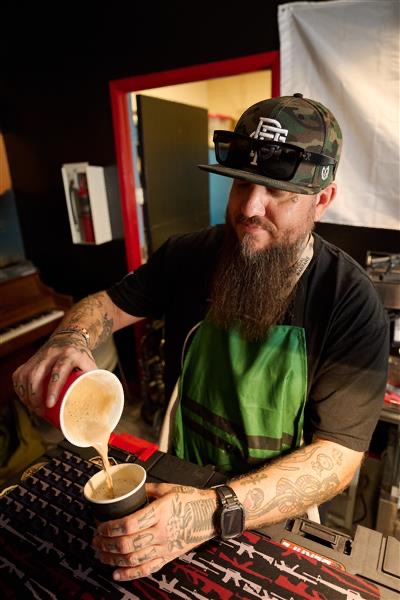
As the Volunteer and Veteran Activities Coordinator for U.S.VETS Las Vegas, he builds programs that pull former service members out of isolation and back into shared camaraderie. Simultaneously, as Director of Programs for the nonprofit PUNX4CHANGE, he mobilizes the local music scene to pack supply drives and provide street outreach. At the Punk Rock Museum, he helps facilitate PUNX IN RECOVERY, carving out a judgment-free sanctuary where people can discuss mental health and sobriety against a backdrop of guitars and leather jackets.
In each space, the mission remains consistent. DePew is quick to disabuse anyone of the notion that he is swooping in to rescue people. Real service, he has found, begins with listening.
“I’ve learned that you can have every resource in the world, but if people don’t trust you enough to reach for it, it doesn’t mean much,” he explains. “People don’t always need someone to fix them. Sometimes they just need someone willing to meet them where they are and walk with them toward where they want to go.”
Redefining the Win
That philosophy was forged through real-time encounters on the pavement. At one PUNX4CHANGE outreach event, DePew met Roger, an unhoused veteran living rough. Rather than treating the encounter as a transactional afternoon of charity, DePew and his team circled back for Roger the following Monday morning. Roger accepted the offer, entered the U.S.VETS residential program, and has spent months steadily advancing toward permanent housing.
Then there is Dillon, whose journey out of the storm channels required visit after visit before he chose to take the leap into sobriety. His path forward has included setbacks and stumbles, reflecting the messy, non-linear nature of recovery.
For DePew, both outcomes represent success. The metric cannot simply be a seamless success story tied with a bow; it is whether an advocate kept showing up so that when an individual was finally ready, a hand was extended. His advice to anyone entering community outreach is straightforward: expect failure, learn to absorb rejection without growing cynical, and go back anyway.
Beyond the Silos
DePew credits his mentors for showing him how to navigate these complex spaces without compromising authenticity. From Rob Banghart, an outreach leader who leveraged his own history with addiction to reach people still trapped in it, DePew learned that lived experience can be an advocate’s greatest asset. From community organizer Lester Lumbad, he saw the power of breaking down territorial silos between businesses, nonprofits, and civic groups.
That collaborative blueprint now informs DePew’s expanding work with MCON, an initiative bringing military-connected communities and cultural leaders together on a national stage. Across every platform, his objective is to bridge sectors that spend too much time operating in isolation.
“I don’t want to just have a seat at a bunch of different tables,” DePew says. “I want to be the person who realizes those tables should probably be pushed together.”
For a veteran who spent two decades navigating rigid military hierarchies, this next chapter offers no pre-printed manual or rank insignia to chase. Instead, Jimmy DePew is drafting his own blueprint in real time—one conversation, one meeting, and one open door at a time.
About Jimmy DePew
Jimmy “Pew Pew” DePew is a Las Vegas native, 20-year Air Force Reserve veteran, and community organizer serving as Volunteer & Veteran Activities Coordinator for U.S.VETS Las Vegas and Director of Programs for PUNX4CHANGE.