A Clean Break at Forty: Trent Larson’s Artful Gamble
Leaving a stable career behind with $500 in his pocket, muralist Trent Larson traded safety for a life in full color on the Las Vegas pavement.
Featuring Trenton (Tron ten) Larson · November 25, 2026 · 176 reads

“The scariest thing was that I was so willing to do it without hesitation or looking back. I was almost dead inside prior to that change that I felt alive again.”
In 2018, visual artist Trent Larson pointed his Jeep north out of Phoenix toward the neon glare of Las Vegas with five hundred dollars in cash, a bicycle, and his dog riding shotgun. He had just turned forty. Behind him lay three decades in the Sonoran Desert, including a fifteen-year career in behavioral healthcare where he had climbed to the highest rung available on the corporate ladder.
From the outside, walking away from comfort and seniority seemed like a sudden break. But inside, the engine had long ceased to turn over. Larson had reached a crossroads where security felt increasingly like stagnation. Rather than continuing through the motions, he packed only what was essential and decided to finally test his hands against the wall.
The Question Across the Table
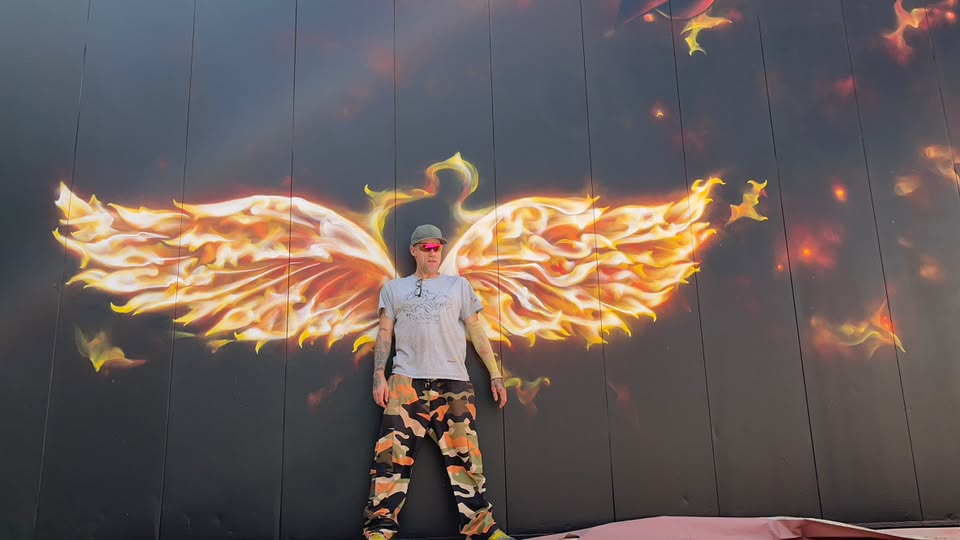
Larson’s creative roots stretched back to Southern California, where he was born in the City of Orange, before his family relocated to Phoenix in 1988. There, through studies in commercial art at Dobson High School and the East Valley Institute of Technology, he laid the technical foundations of design, while street graffiti introduced him to the kinetic energy of scale and aerosol. Yet, making fine and public art a full-time livelihood in Phoenix proved perpetually elusive.
The decisive turning point arrived during an unsparing conversation with a close friend named Mike. Unlike casual cheerleaders, Mike pushed Larson to confront his own hesitations, interrogating the gap between ambition and action. He asked Larson directly what he truly wanted to achieve, and precisely what he was prepared to surrender to claim it.
The conversation drew a permanent boundary in Larson's mind. To pursue a serious creative life, he realized he would need to forfeit every convenience he took for granted. If that meant being broke, starting from scratch, or facing public skepticism, he was ready. As Larson recalled of the jump, "The scariest thing was that I was so willing to do it without hesitation or looking back. I was almost dead inside prior to that change that I felt alive again."
Rebuilding from the Ground Up
Arriving in Southern Nevada with virtually no financial safety net required an immediate operational shift. The romance of the bohemian artist quickly gave way to the cold mechanics of personal discipline. In Phoenix, Larson had never been forced to manage money with razor-thin margins; in Las Vegas, survival demanded total clarity.
He had to become rigorous about budgets, workflow, and structure while preserving the creative fluidity required to seize sudden commercial opportunities. Every wall offered was an audition for the next. The internal evolution surprised him not because it was painless, but because the discipline arrived naturally once the purpose was clear. Stripping away the trappings of his former life allowed him to inhabit the professional mindset necessary to sustain a studio practice through every lean cycle.
Scaling the Desert Canvas
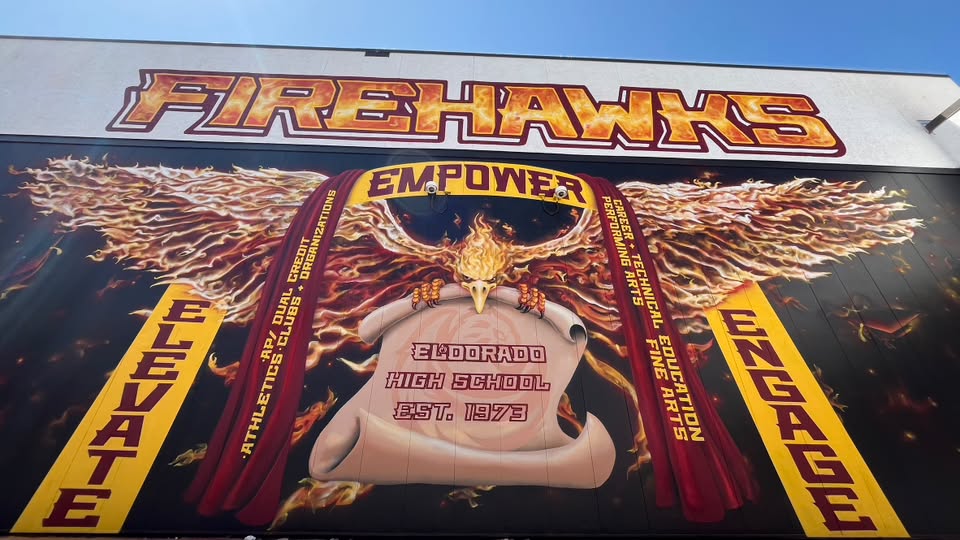
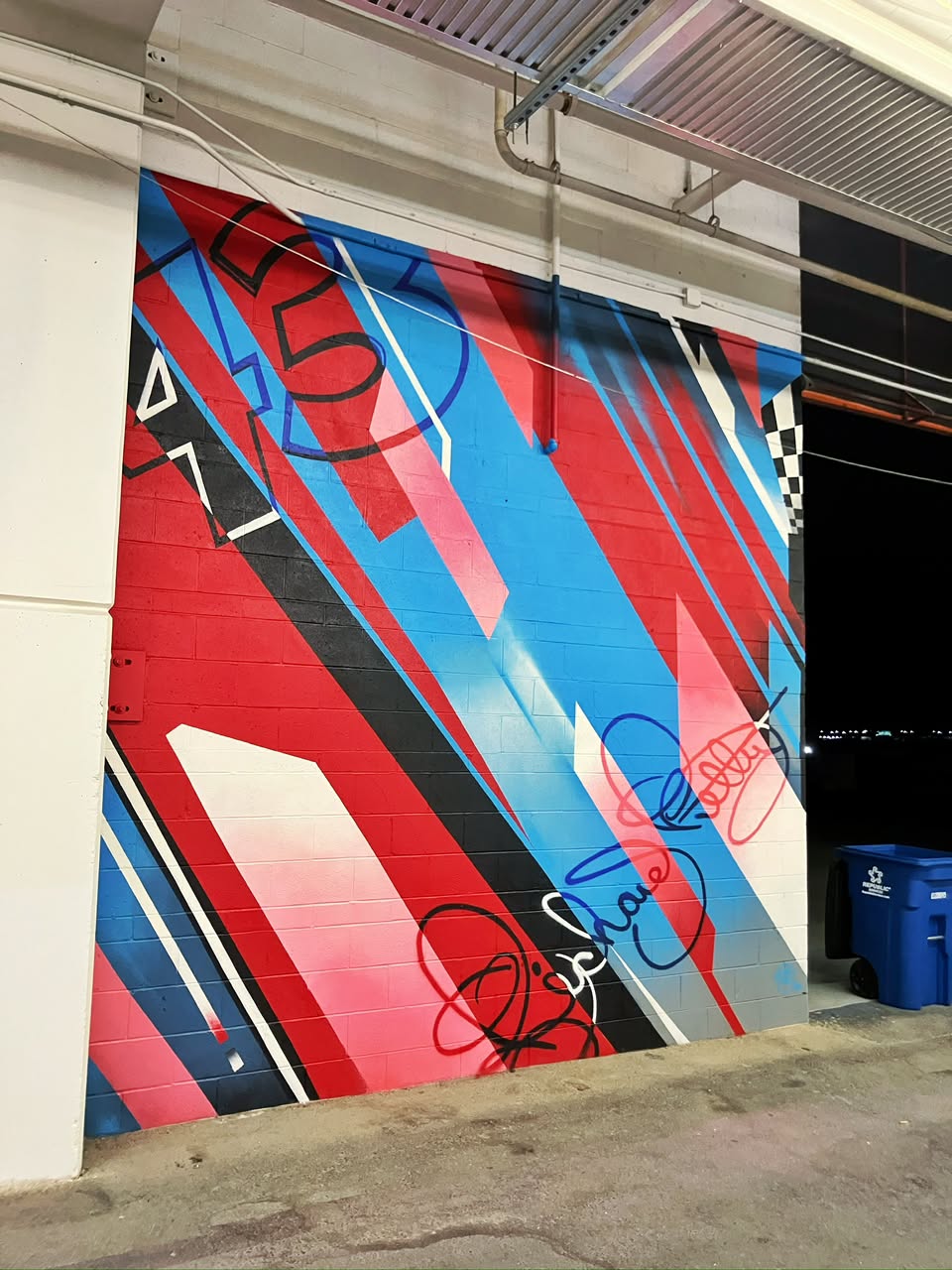
Larson wasted little time asserting his presence across the valley’s built environment. Early commissions arrived quickly, including high-visibility work for the Flamingo Hotel Grill Restaurant. His momentum accelerated when he partnered with the ISI Group (Industry Supporting Industry) to transform the façade of The Arts Factory, the historic anchor of downtown’s 18b Arts District. The commission cemented his reputation as an urban painter capable of executing complex, monumental concepts.
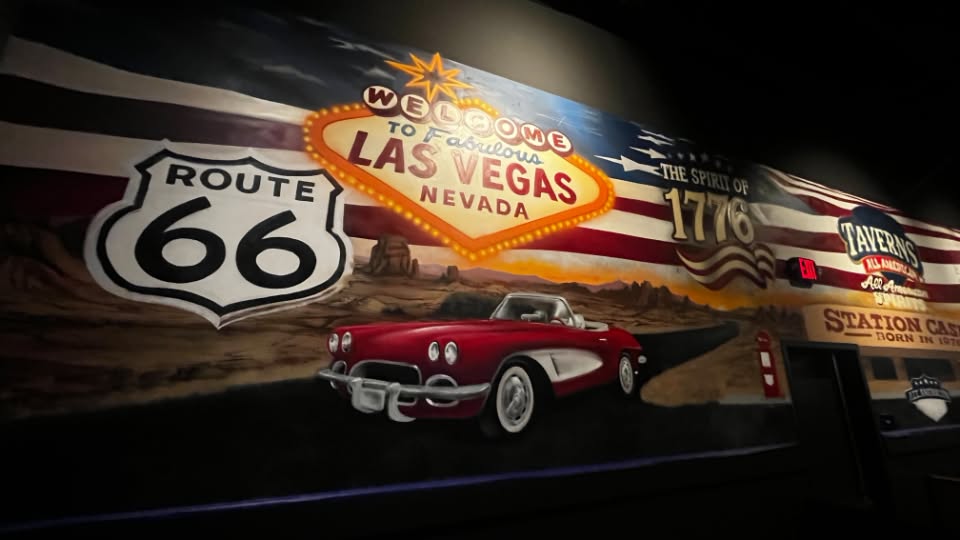
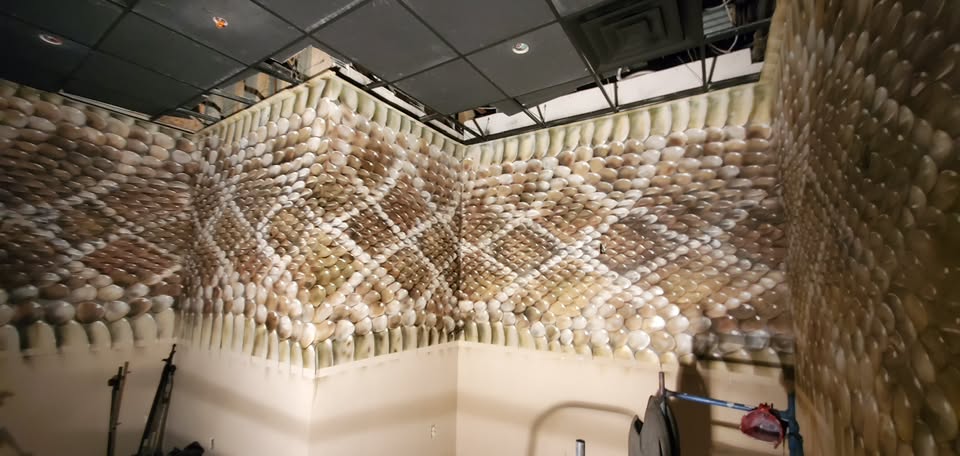
From there, Larson’s aerosol and brushwork spread across the core of the city. He contributed works for Mezcla Tequila and Seviche Bar in the Arts District, and executed dynamic pieces inside Ole Red at the Horseshoe Hotel and Casino. Moving fluidly between sculpting, commercial branding, and expansive exterior murals, he refused to confine himself to a singular niche, operating under the working philosophy that versatility is king.
Trial by Fire and Peer Pressure
The road was not without severe setbacks. Just as Larson’s momentum hit full stride, a devastating fire destroyed his studio space, wiping out materials and works in progress. The loss forced yet another painful reset, stalling his plans for a brick-and-mortar gallery.
Yet adversity also sharpened his competitive spirit and his appreciation for the Las Vegas arts community. Looking across downtown, Larson drew fuel from local heavyweights like Gear and Black 57, whose continuous technical evolution raised the expectations for public muralism across the valley. Larson viewed this creative friction not as a rivalry of animosity, but as mutual elevation—a persistent reminder to push harder on the ladder and refine his own craft.
His metric for accomplishment transformed alongside his surroundings. The conventional indicators of prestige—social media metrics, surface notoriety, or fast cash—lost their shine. As he reflected on his path, "Right now, success to me looks like what I’m doing right now. Living off of my art, still learning how to do it better, and having gone through hard times, loss, famine, and also fortune."
Holding Down the District
Today, Larson’s ambitions extend well beyond his personal portfolio. Having weathered eviction, relocation, and fire, he is rebuilding toward a physical studio and gallery space designed to nurture emerging regional talent. He is also advocating for a unified, transparent collective that connects local artists directly with curators, casinos, and corporate clients without sacrificing artist agency or fair compensation.
As cranes reshape downtown Las Vegas and gentrification exerts pressure on the 18b Arts District, Larson intends to keep the neighborhood grounded in the grit that built it. For the kid from Orange County who walked away from everything at forty, the mission remains singularly clear: keep the control in the hands of the makers, keep painting the town on his own terms, and ensure that the artists who gave the city its soul are never engineered out of the frame.
About Trenton (Tron ten) Larson
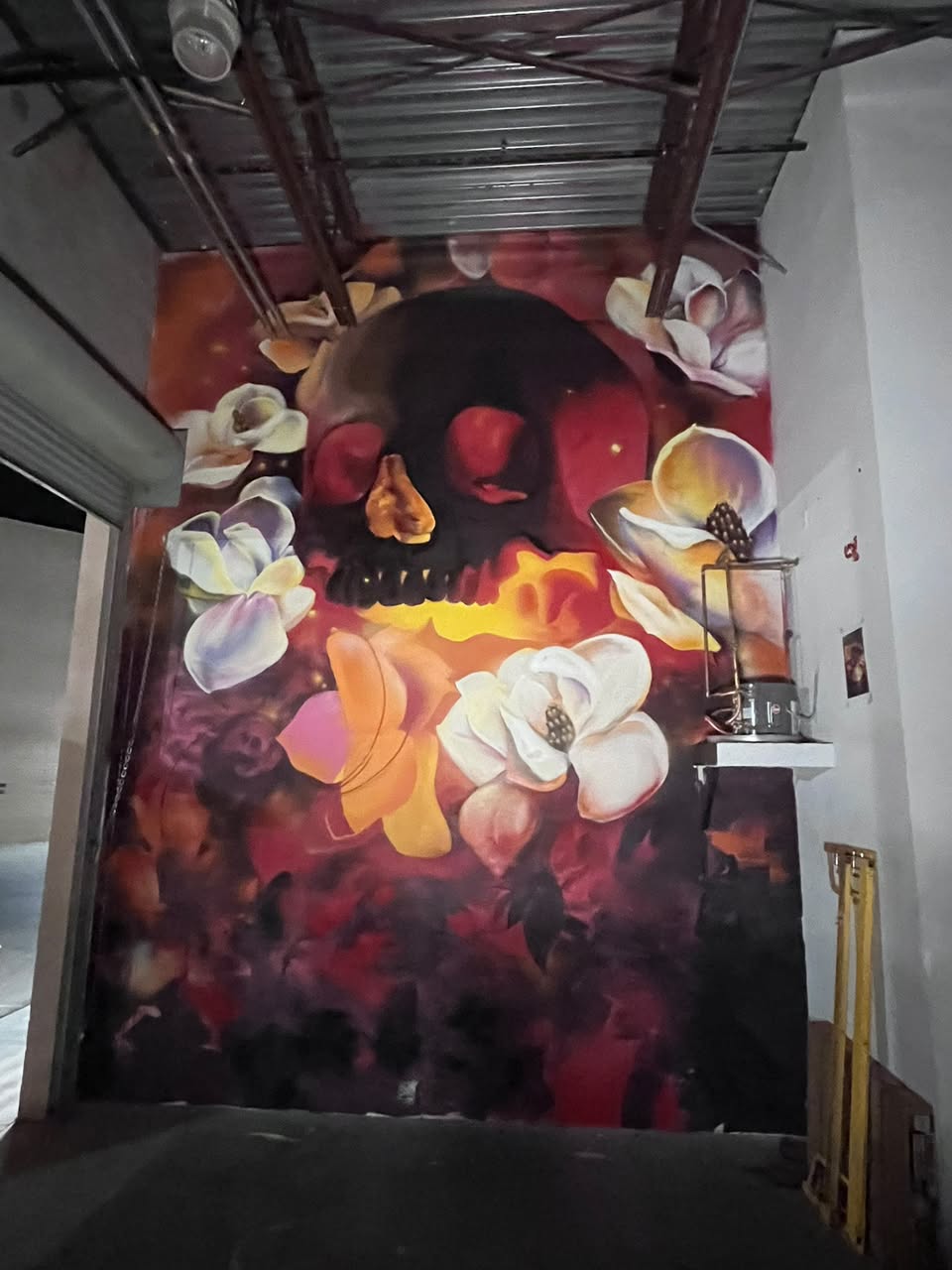
Trent Larson is a Las Vegas-based visual artist, muralist, and tattoo artist known for prominent public installations across the 18b Arts District and the Strip.